Centre to install 500 earthquake early-warning sensors in Uttarakhand
The Pushkar Singh Dhami government shared the information during the ongoing budget session of the state assembly at Bhararisain on Thursday.
Governor RN Ravi highlighted the government’s efforts to restore law and order, curb illegal infiltration, improve women’s safety, and revive economic growth through industrial development and welfare initiatives.




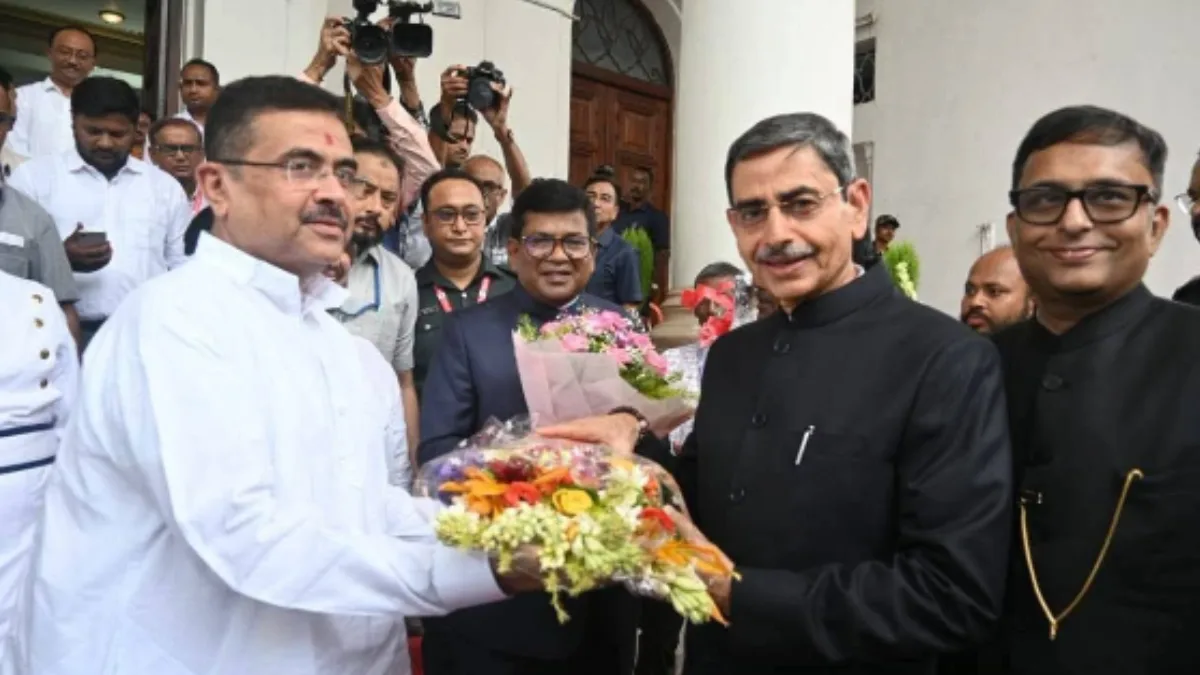
Photo: SNS
The Bharatiya Janata Party (BJP) had it moment of glory on Thursday as the first Budget session kicked off in the West Bengal assembly, after the saffron party registered its first victory in the state in the recently held state elections.
Governor RN Ravi delivered a strongly worded address praising the performance of West Bengal government as the first Budget Session of the new administration commenced.
Advertisement
The Governor highlighted the government’s efforts to restore law and order, curb illegal infiltration, improve women’s safety, and revive economic growth through industrial development and welfare initiatives.
Advertisement
The Budget Session which kicked off with the customary address by the Governor will continue till 25 June. On 22 June, discussions on the Budget are expected to gain momentum.
In his speech, Ravi said the state government is committed to preventing demographic changes caused by illegal infiltration, and has already initiated the process of transferring land to the Border Security Force (BSF) for the installation of border fencing in vulnerable areas.
“The government is determined to check infiltration and strengthen border security,” he said, adding that decisive steps have been taken to establish the rule of law across the state.
The Governor also underscored the administration’s “zero-tolerance” policy towards crimes against women and children. In an indirect reference to the previous Trinamool Congress (TMC) regime, Ravi claimed that extortion rackets, criminal syndicates and organised lawlessness that had plagued various parts of the state had been effectively curbed.
Measures to combat human trafficking and reclaim illegally occupied land were also highlighted as major achievements of the government.
Ravi praised welfare initiatives such as the Annapurna Bhandar scheme and announced that the state would implement the National Education Policy (NEP). He further stated that efforts were underway to reopen closed tea gardens, particularly in North Bengal, with the objective of generating employment and reviving local economies.
Launching a sharp attack on the previous government, the Governor alleged that the former administration had been mired in corruption and had failed to ensure justice for ordinary citizens. He claimed that several development projects had suffered due to deliberate delays and administrative inaction.
Referring specifically to the Chingrighata Metro project, he said that work had remained stalled under the previous regime, resulting in developmental setbacks and inconvenience to residents.
“The new government has taken firm action against institutional corruption and work on the Metro project has already resumed,” he said.
The Governor further asserted that people of West Bengal had been deprived of the benefits of several central government schemes for years. He assured the assembly that the present administration would make every effort to ensure the implementation of all eligible central programmes in the state.
Addressing regional concerns, Ravi said the government would engage with all stakeholders to find a lasting solution to the long-standing Gorkhaland issue in Darjeeling.
On employment generation, he noted that many talented students had been compelled to migrate to other states in search of jobs. To address this challenge, the government plans to establish startup hubs and provide support to unemployed youth.
He also announced a proposal to set up an Indian Institute of Technology (IIT) in North Bengal. Emphasising industrial growth, the Governor said unused and underutilised land would be reclaimed and put to productive industrial use. The government would also focus on coastal shipping, inland waterways and fisheries to strengthen the state’s economy.
In the education sector, he promised improvements in student-teacher ratio, modernisation of libraries and regular conduct of Teacher Eligibility Test (TET) examinations.
Stressing the importance of governance reforms, he advocated greater digitisation of public services and called for the timely completion of the national Census exercise.
The Governor concluded by assuring that farmer-friendly policies, streamlined land acquisition mechanisms and coordinated administrative efforts would drive the state’s development agenda in the coming years.
Advertisement